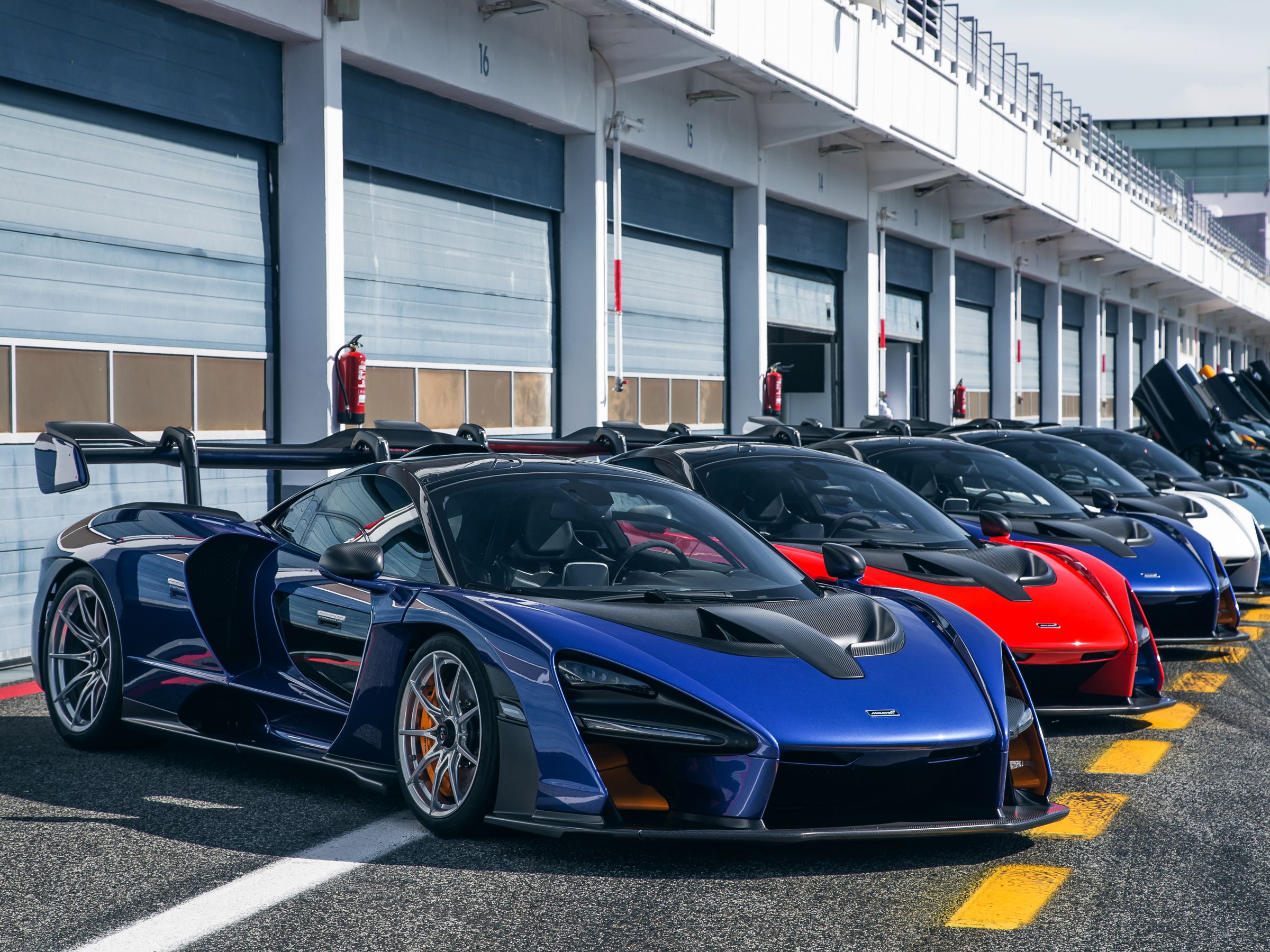
McLaren · supercar
2018 McLaren Senna
789 HP · 2.7s · $958,966
The Verdict
They named it after Ayrton Senna. The car had to be transcendent. It is.
The Vibe
Violent. Uncompromising. Borderline religious on a track.
Best For
Track day obsessives who consider comfort a character flaw.
Skip If
You ever plan to use it on a public road. Or value your fillings.
They named it after Ayrton Senna. That's either the bravest or most reckless decision in McLaren's history. Senna isn't a car person's hero. He's a religion. Name a car after him and it better be worthy of a man who drove a Toleman through a monsoon at Monaco like he was personally offended by rain.
If the car was anything less than transcendent, it would've been an insult.
It's transcendent.
twin-turbo V8
curb weight
downforce at 155 mph
total production
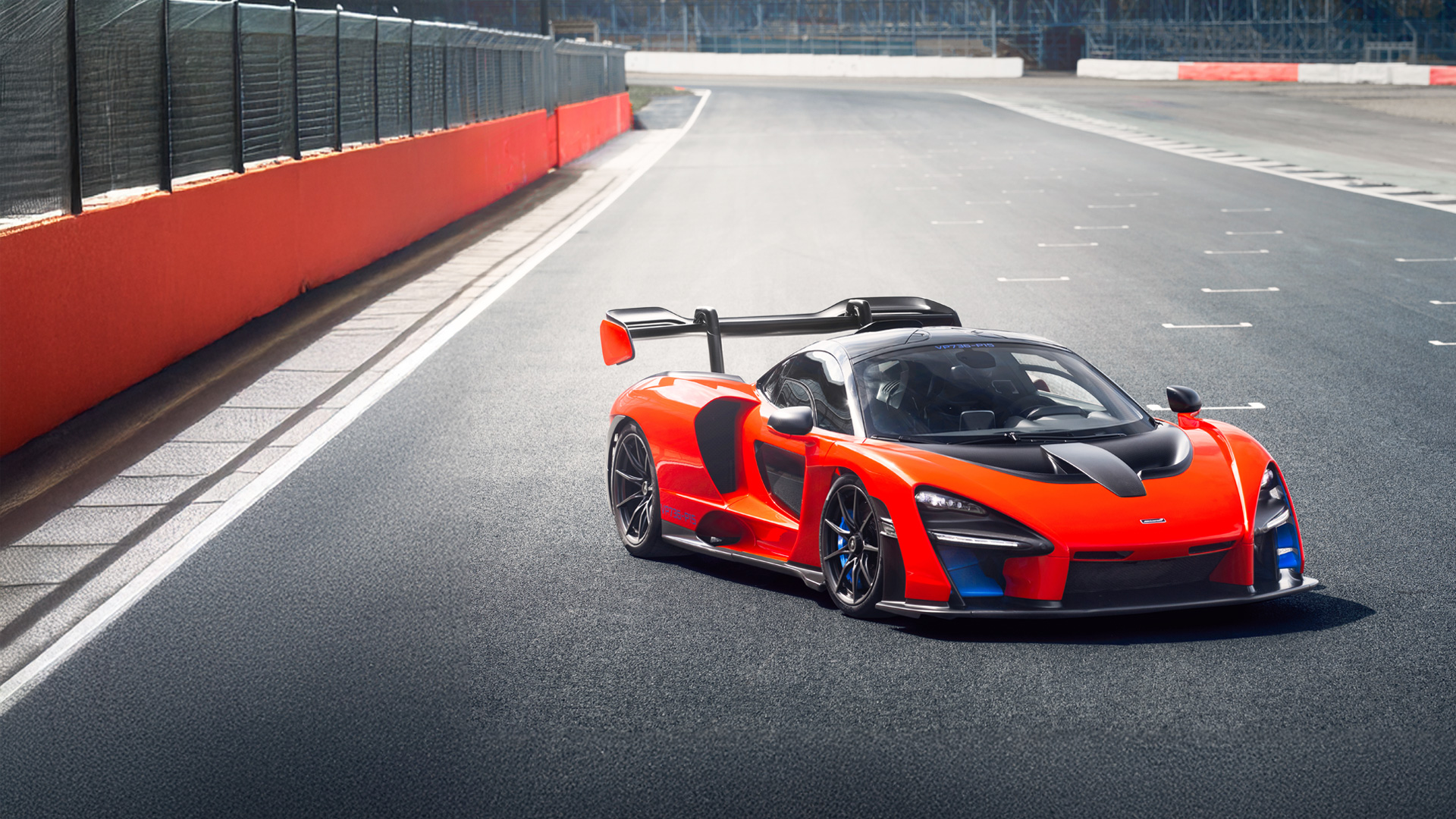
Every surface is a wind tunnel argument that McLaren won.
The Art of Less
789 HP from the twin-turbo 4.0-litre V8 hits like a concussion. But power isn't what makes the Senna special. Weight is.
2,641 lbs. Less than a Mazda Miata and a Honda Civic combined. McLaren built the monocoque from carbon fibre. The body panels from carbon fibre. The seats from carbon fibre. The interior door handles are fabric straps because metal handles weigh too much. Every gram was interrogated, and most of them were fired.
The result is a power-to-weight ratio that makes physics uncomfortable. You don't accelerate in a Senna. You're launched.
The interior door handles are fabric straps because metal handles weigh too much. Every gram was interrogated, and most of them were fired.
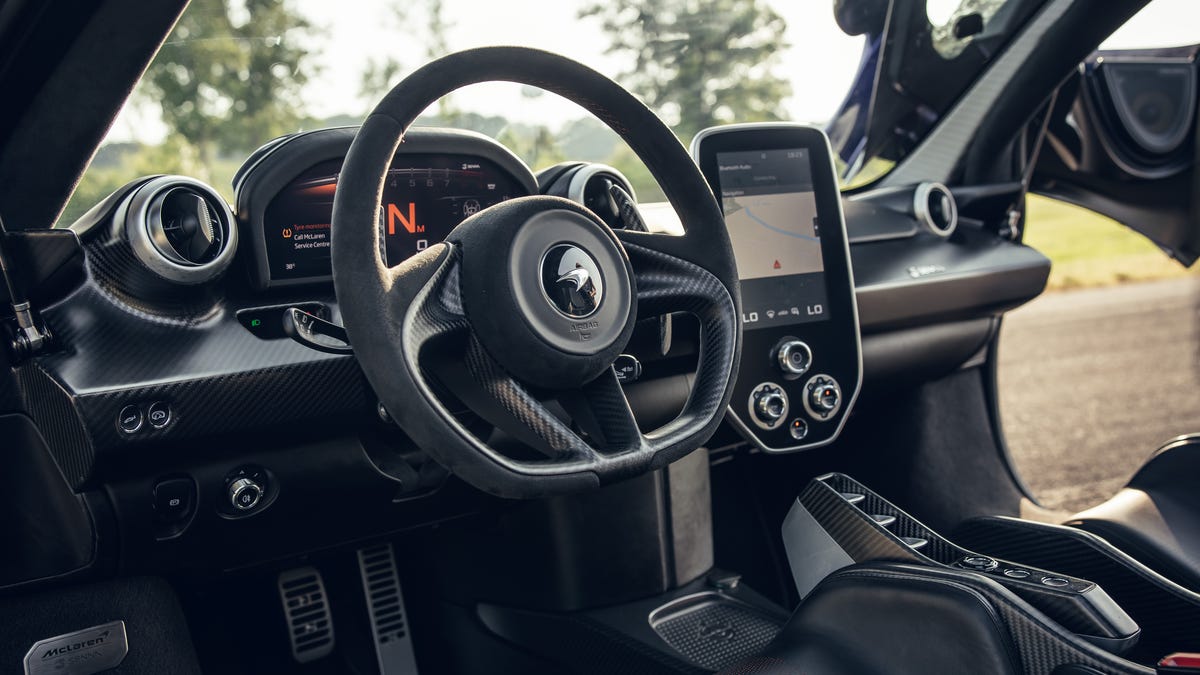
This is not an interior. This is a cockpit that happens to have a heater.
The Track. Only the Track.
The downforce figures are certifiably insane. 800 kg at 155 mph. That's nearly the weight of the car again, pushing it into the tarmac. It doesn't just grip the road. It attempts to fuse with it.
At full throttle through a fast corner, the rear end is so planted it feels like the laws of physics have been politely asked to leave. The brakes haul you down from 150 mph with a violence that rearranges your internal organs. Carbon ceramics the size of dinner plates. You could cook on them after a hot lap. Literally. People have tried.
On a track, this car is the closest thing to telepathy on four wheels. The steering tells you everything. Tyre temperature. Surface changes. The exact moment grip runs out. Most supercars talk to you. The Senna whispers secrets.
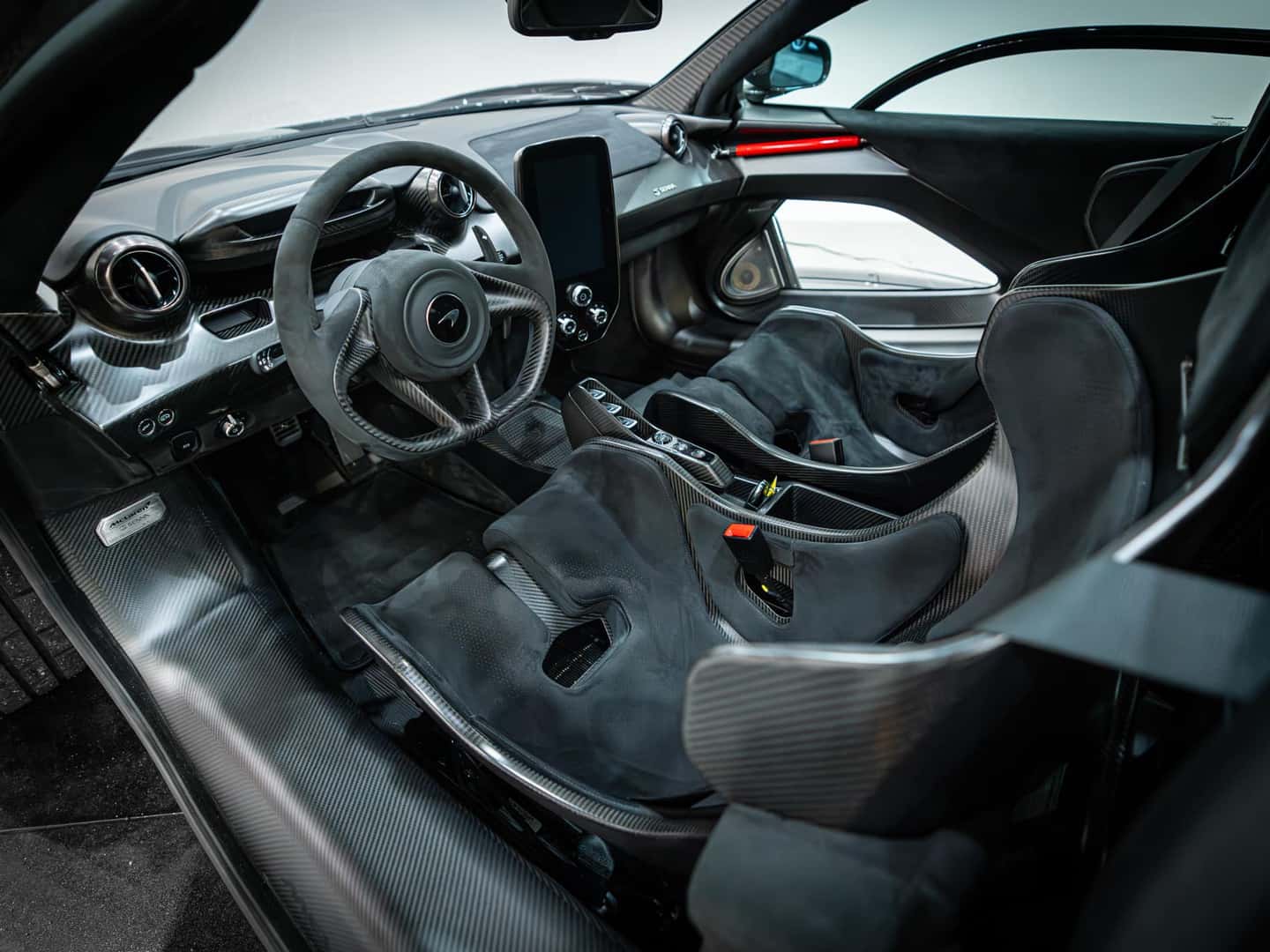
The monocoque tub is visible from inside. McLaren didn't cover it because covering it would add weight. And also because it's beautiful.
The Road. Absolutely Not the Road.
On the road, it's miserable. I need to be honest about this because McLaren's brochure somehow forgot to mention it.
The ride is punishing enough to crack fillings. Every expansion joint on the motorway arrives through the seat like a personal insult. The visibility through those dihedral doors is like peering through a letterbox. Lane changes require faith. Parking requires a spotter and the willingness to accept that you might not make it out of the car park with your dignity intact.
It's loud enough at motorway speed to end conversations and possibly marriages. The cabin, being carbon fibre and not much else, transmits every decibel the twin-turbo V8 produces directly into your eardrums. Road trips are technically possible. Your audiologist will have opinions about whether they should be.
800 kg
McLaren Senna (track focus)
344 kg
Ferrari Enzo (road GT)
Downforce at 155 mph. The Senna generates more than double. That's not a car. That's an inverted airplane.
The numbers that justify the name.
Engine
Performance
Nobody buys a Senna for the motorway. You buy it because nothing else on earth corners like this. Nothing. Not the P1. Not the 720S. Not the Valkyrie, which costs three times as much and is harder to get into than medical school.
McLaren built 500 of them. They're all spoken for. The secondary market has added a healthy premium because the people who bought them drove them on track, realised what they had, and decided to never let go.
Ayrton Senna once said: "If you no longer go for a gap that exists, you are no longer a racing driver." This car finds gaps that don't exist. And goes for them anyway.
He would have approved.
Full Data Sheet
Dimensions
Fuel Economy
Safety

Specifications sourced from McLaren official specifications . Last verified: 2024-12-01.