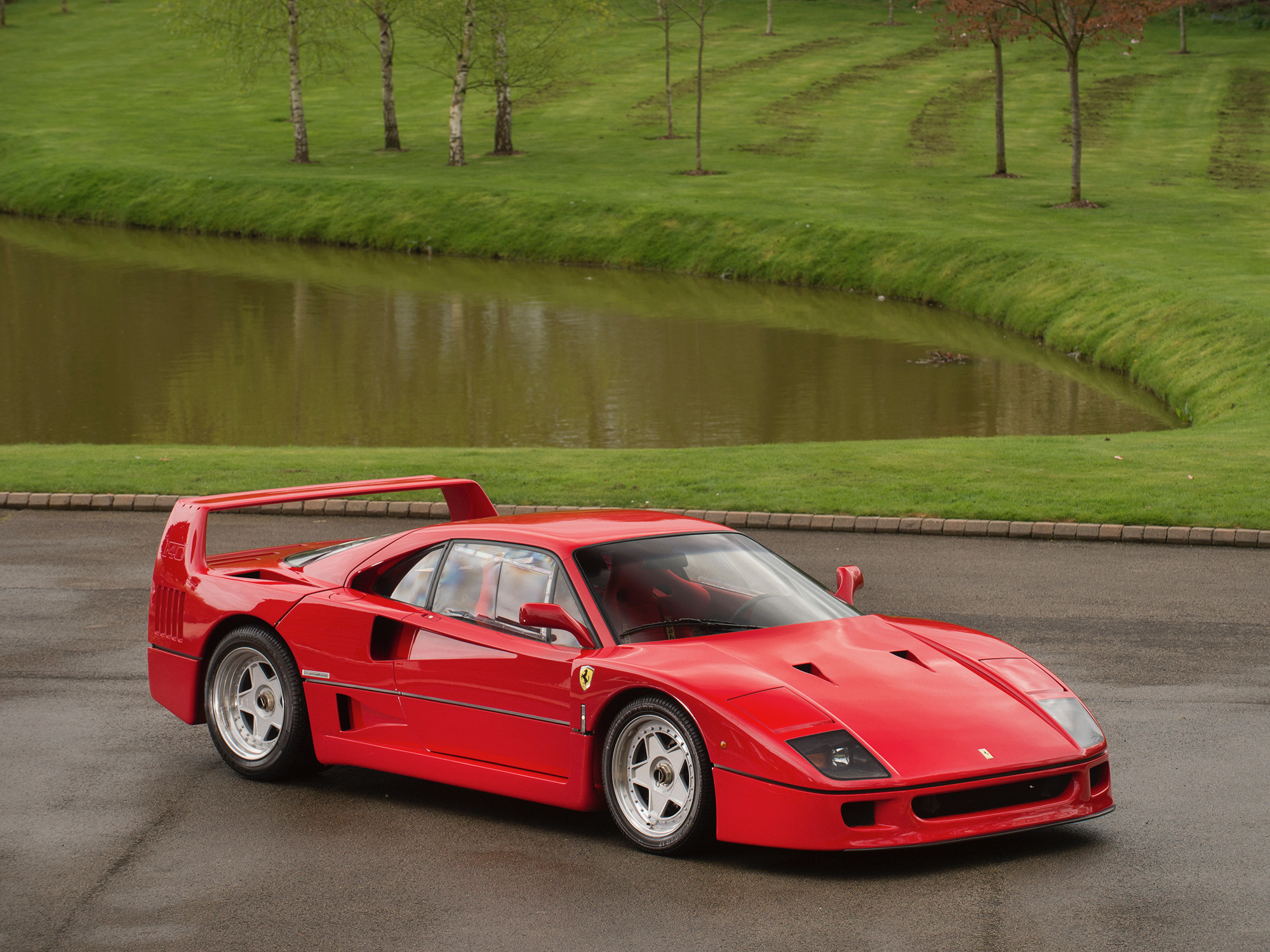
Ferrari · classic legend
1992 Ferrari F40
478 HP · 4.1s · $399,150
The Verdict
The greatest car ever made. I will not be taking questions.
The Vibe
Raw. Terrifying. Perfect.
Best For
Anyone who understands that the best things in life are the ones trying to kill you.
Skip If
You value your life, your comfort, or your ability to see out of the rear window.
The F40 is the greatest car ever made. I will not be taking questions.
I've driven faster cars. I've driven more comfortable cars. I've driven cars that don't actively try to kill you when it rains. None of them matter as much as this one. And I need to explain why, because the specs alone don't do it. The specs are almost irrelevant. The F40 isn't a collection of numbers. It's a statement of intent from a dying man who wanted his last car to be his angriest.
twin-turbo V8
dry weight
top speed
total production
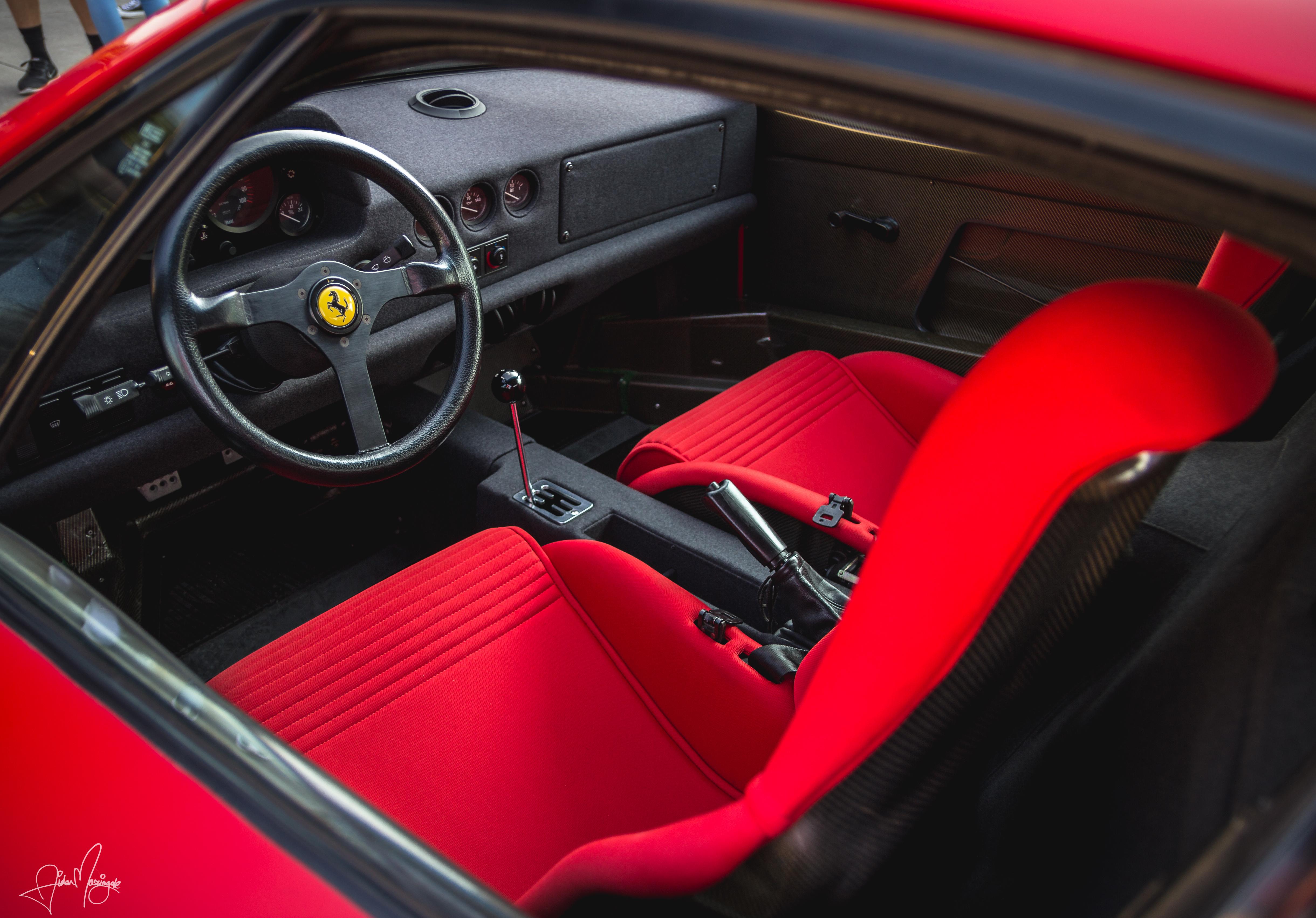
Pop-up headlights. NACA ducts. A face that launched an entire generation of bedroom posters.
Built by a Man Who Hated Comfort
Enzo Ferrari was 90 years old when the F40 was being developed. He'd seen the 288 GTO, approved it, and thought it was too soft. The F40 was his correction.
No carpets. No door handles. No glove box. The door panels are bare. The windows are fixed polycarbonate that don't roll down. The body panels are so thin you can flex them with your thumb. Kevlar and carbon fibre over a steel spaceframe, and none of it is there for looks. Every panel exists to be light or to channel air. That's it.
1,100 kg dry. A modern Mazda MX-5 weighs more. Enzo basically told his engineers to remove everything that wasn't engine, tyres, or the minimum amount of body required to keep the driver from falling out. They listened.
Enzo basically told his engineers to remove everything that wasn't engine, tyres, or the minimum amount of body required to keep the driver from falling out. They listened.
The Turbos That Changed Everything
Twin-turbocharged 2.9-litre V8. 478 HP at 7,000 RPM. The turbos are IHI units, and they spool with the subtlety of a freight train. Below 3,500 RPM, the F40 is almost docile. Almost manageable. Then the boost hits. All of it. At once.
This is not progressive turbo delivery. This is an on/off switch that someone labelled "fast" and "very fast." The car doesn't accelerate. It detonates. The rear tyres, 335mm wide and made of a rubber compound that Pirelli probably tested by throwing it at things, do their best. Their best is often not enough.
In the wet, the F40 is genuinely dangerous. Not "exciting-dangerous" like a modern Porsche in Sport Plus. Dangerous-dangerous. Like "this car was homologated for Group B racing and nobody thought to add traction control because Enzo Ferrari considered electronic aids a personal insult."
The Last Ferrari He Touched
Enzo Ferrari died on August 14, 1988. The F40 was revealed a year before. It was the last car he personally approved. He sat in the passenger seat of a prototype, driven by test driver Dario Benuzzi around Fiorano, and when they stopped he said nothing for a moment. Then he nodded.
That nod greenlit a car that would become the most iconic Ferrari ever built. Not the 250 GTO. Not the Testarossa. The F40. Because the 250 GTO was beautiful and the Testarossa was glamorous, but the F40 was honest. Brutally, uncomfortably, magnificently honest.
There are no pretences here. No luxury. No compromise. The car tells you exactly what it is the moment you look at it, and what it is, is the purest expression of speed that Ferrari has ever built. They've built faster cars since. They've never built a purer one.
$400k
Ferrari F40 (1992)
$2.5-3M
Ferrari F40 (2024 market)
An investment that outperformed the S&P 500 by a factor most hedge funds would commit crimes for.
The numbers that started a legend.
Engine
Performance
There are faster cars now. There are more comfortable cars now. There are cars that won't try to kill you in the rain. Cars with air conditioning that works, with seats that don't feel like they were designed for someone else's skeleton, with windows that actually open.
None of them matter as much as this one.
The F40 is not a car you enjoy. It's a car you survive. And the surviving is the point. Every drive is an event. Every gear change is an act of faith. Every corner in the wet is a negotiation with physics that you might lose.
And when you park it, and you get out, and your hands are shaking slightly, and your shirt is damp, and you look back at it sitting there, impossibly low, impossibly red, impossibly real, you understand why Enzo nodded.
Because it's perfect. Not despite the discomfort. Because of it.
Full Data Sheet
Dimensions
Fuel Economy
Safety

Specifications sourced from Ferrari official specifications . Last verified: 2024-12-01.